7 Signs Your Child Might Thrive in a Small, Inclusive Classroom
How to tell if a small class size, mixed-ability grouping, and a personalized pace would help your K–6 child learn, connect, and grow with confidence.
Every parent has watched their child come home from school and known, in that quiet way parents know, that something is off. Maybe the homework battles keep getting louder. Maybe the friendships aren't sticking. Maybe your bright, curious kid has started to say, "I'm the dumb one" — and you can feel the door in their heart starting to close.
Before you decide anything, take a breath. Most children who struggle in a big-box classroom are not broken. They're mismatched. The environment was designed for the average child in a class of twenty-five, and yours simply isn't average — in the best possible sense.
A small, inclusive classroom isn't a magic wand, but for a large group of K–6 learners it is the single biggest lever a family can pull. Below are seven signs, drawn from years of working with families in Byrnes Mill and the greater St. Louis area, that your child might genuinely thrive in a smaller, more personalized setting.
1. Your child is "fine" academically — but exhausted by the end of the day
Grades on the report card look okay. The teacher says your child is "doing well." But by 3:30 p.m. your kid is melting down on the ride home, snapping at siblings, or collapsing into a screen because they've got nothing left to give.
That gap between "performing" at school and "surviving" at school is one of the earliest, quietest signals we see. In a class of twenty-plus students, the amount of energy required to sit still, filter noise, decode social cues, and hold it together is enormous — especially for kids with attention differences, sensory sensitivities, or anxiety. They pay the bill in private, at home, after hours.
In a smaller classroom, the sensory load is lower, the transitions are fewer, and the adult-to-student ratio means the child is spending less energy trying to be invisible. Many parents describe a striking change within the first month: the child who used to crash after school starts asking to play, to read, to talk about their day.
2. They understand the concept — but freeze on the worksheet
You quiz them at the kitchen table and they nail it. They can explain place value, retell the story, work through the math problem out loud. Then the worksheet comes home half-finished, and the teacher's note says, "Not applying themselves."
This is one of the clearest signs that instruction and assessment aren't aligned to how your child processes information. Big classrooms depend on standardized worksheets because a single teacher can't design a custom check-for-understanding for each of twenty-five students. Small classrooms can — and should.
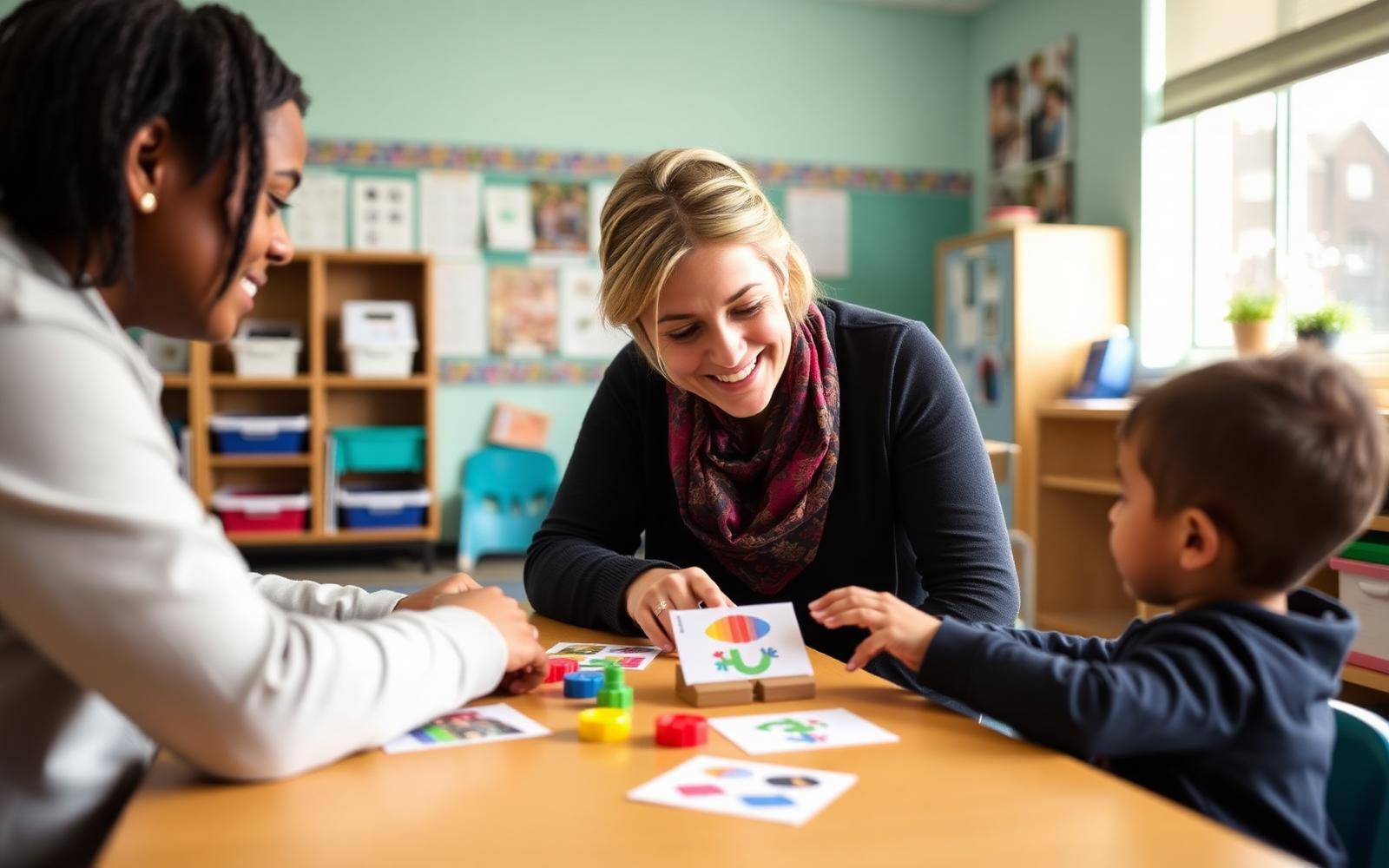
In a small K–6 setting, a teacher can offer the same concept three ways: a written prompt, a verbal explanation, a hands-on manipulative. They can watch your child work in real time and know, without waiting for a graded paper, whether the confusion is about the math or about the format. That single change — being seen while they think — often unlocks kids who've been labeled as underperformers for years.
3. Socially, they either disappear or explode
There is no middle ground for many kids in a crowded classroom. Either they melt into the background so completely that no one remembers their name, or they act out just to be a person in the room instead of a face in the crowd.
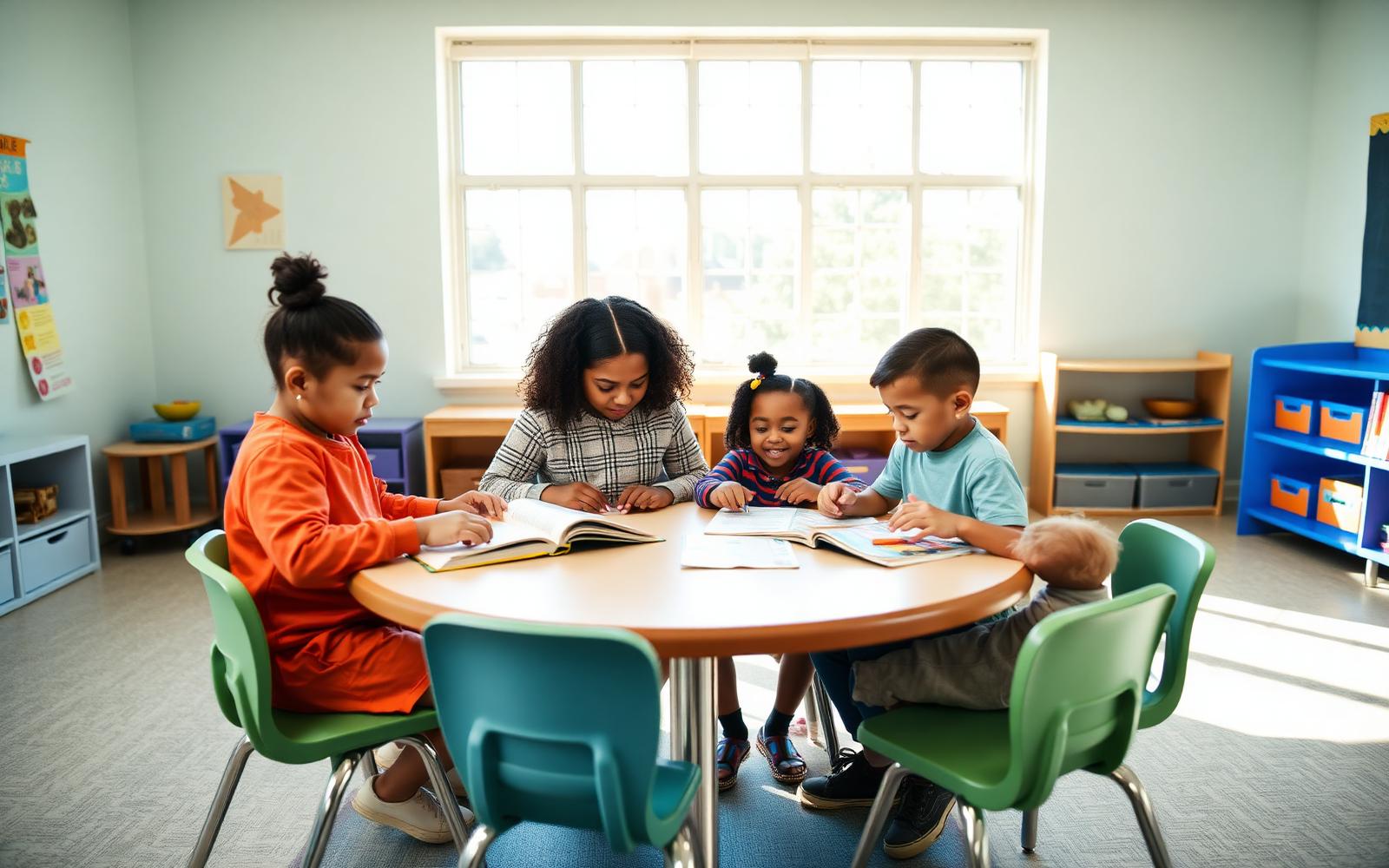
Inclusive classrooms make room for a wider spectrum of "normal." When the class is small, every student is known — their preferred name, their weekend interests, the joke that lands and the topic that shuts them down. Kids who "disappear" get pulled into the circle. Kids who "explode" get more chances to practice regulation with an adult nearby who can coach instead of punish.
We often tell parents on tours that a small class is not just an academic accommodation — it is a social accommodation. Friendships in a class of ten form differently than friendships in a class of twenty-five. There are fewer cliques, more cross-grade play, and a shared understanding that "the way we do things here" includes everybody.
4. Your child has a diagnosis, a suspicion of one, or has been quietly "different" for years
You might have a formal IEP or a 504 plan. You might have paperwork that says autism, ADHD, dyslexia, sensory processing disorder, anxiety. You might have none of that — just a hunch, and a stack of teacher comments that use the words "distracted," "immature," or "not living up to potential."
An inclusive private school treats those labels as useful information, not as ceilings. Small class sizes make it possible to build a learner profile for every child — not just the ones with paperwork — and to adjust instruction accordingly. A student with an ADHD diagnosis and a student who simply moves and thinks quickly may need many of the same supports; a smaller classroom is designed to give both.
If you have wondered whether your child needs a formal evaluation, a small inclusive school can also be a low-stakes place to gather better data. Teachers who see your child every day, in a variety of contexts, can offer richer observations than a once-a-year meeting.
5. They are pouring energy into hiding what they need
Kids figure out very early what's "cool" and what's embarrassing. In a large classroom, the child who needs to stand while working, wear noise-reducing headphones, take a fidget, or ask for the directions to be repeated learns quickly that those needs mark them as "the weird kid." So they stop asking. And then they stop learning.
An inclusive classroom normalizes accommodations. When the fidgets are in a basket for anyone, when the wobble stools are just chairs, when asking for a movement break is as ordinary as asking for a bathroom pass, kids stop spending their brains on hiding. That reclaimed mental bandwidth goes straight into reading, math, art, friendships — the things school is supposed to be about.
6. Homework is destroying your evenings
If you finish every school day with a two-hour standoff over a worksheet, the problem is almost never your child's motivation. It is almost always a signal that not enough of the learning got to happen at school.
Big classrooms rely on homework to fill the gap between what a teacher can cover in class and what a curriculum demands. Small classrooms don't have to. When a teacher can genuinely check for mastery during the lesson, homework becomes lighter, more targeted, and more optional. Many families find that the switch to a small inclusive school gives them their evenings back — not because "the school is easier," but because the learning is actually finishing during the school day.
7. Your gut has been telling you for a while
We save this one for last because it is the most important. Parents almost always know, months or years before they take action, that the current environment isn't working. They wait because switching feels expensive, disruptive, or like an admission that something is "wrong."
Nothing is wrong. Some children need a bigger pond. Others need a smaller one. Trusting your gut — and giving your child the chance to be known rather than managed — is not a luxury. For many families it is the single decision that changes the arc of elementary school.
What to look for on a tour
If any of the above resonates, put a school tour on the calendar. Walk through a real school day, not just a marketing brochure, and pay attention to:
- How adults talk to kids. Is it warm, specific, and respectful, even during a hard moment?
- How transitions look. Are they calm, previewed, and supported? Or chaotic?
- How the room is arranged. Is there flexible seating, quiet corners, and space to move?
- How your child responds. They will tell you within thirty minutes, in body language, whether this room feels safe.
Small, inclusive classrooms aren't the right answer for every child. But if you've read this list and felt yourself nodding, your child is telling you something. A tour costs nothing but an hour of your time, and the answer — either way — is worth having.
If you're weighing a small inclusive K–6 program in Byrnes Mill or the greater St. Louis area, we'd love to walk your family through a real school day. Schedule a tour and we'll build the visit around your specific questions.