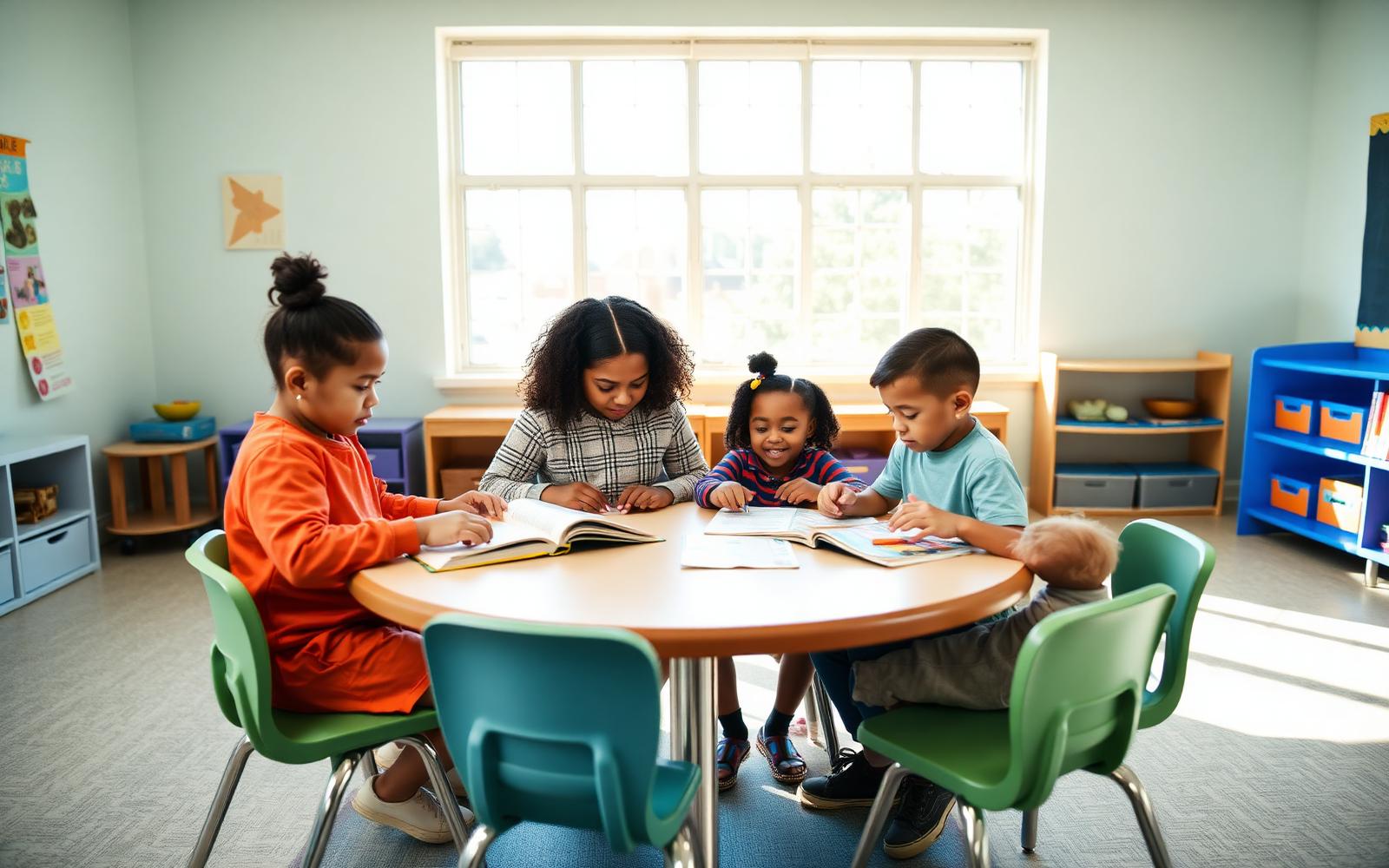
Sensory-Friendly Learning: Designing Classrooms Where Every Child Can Focus
What a sensory-friendly classroom actually is, why it helps every child (not just kids with sensory processing differences), and how parents can advocate for one.
The word "sensory-friendly" has entered mainstream parenting the way "gluten-free" did fifteen years ago. Everyone has heard it. Fewer people can define it. And a small industry has grown up around selling parents wobble stools and weighted lap pads without ever explaining what problem they solve.
This article is our attempt at a clear, practical definition of a sensory-friendly classroom — what it is, why it matters for every child (not just kids with a diagnosis), and how a family can tell whether a school genuinely means it.
The very short science
Human brains are sensory processing machines. Every second, your child's brain takes in information from at least seven sensory channels: sight, sound, touch, taste, smell, movement (vestibular), and body position (proprioception). It filters, prioritizes, and responds — usually below the level of conscious awareness.
When the incoming information matches what the brain expects and can filter, we call that "regulated." A child can attend, learn, and interact. When the incoming information overwhelms the brain's ability to filter, we call that "dysregulated." A child cannot attend, cannot learn, and often behaves in ways that get labeled as defiant or immature.
Every child sits somewhere on a sensory continuum. Some kids need a lot of input to feel regulated (they seek movement, noise, deep pressure). Some need very little (they avoid crowds, bright lights, strong smells). Most are somewhere in the middle, but every child shifts across the day as they get tired, hungry, or stressed.
A sensory-friendly classroom is designed with that reality in mind. It reduces unnecessary sensory noise so that the child's brain can spend its filtering budget on the actual work — reading, math, friendships — instead of on surviving the environment.
What a sensory-friendly classroom is not
Let's clear the underbrush first. A sensory-friendly classroom is not:
- A silent classroom. Kids need to talk, laugh, move, sing.
- A minimalist white box. Bare walls can be as dysregulating as busy ones.
- A room full of fidgets and gadgets. Tools help, but tools are the smallest piece.
- For "sensory kids" only. It's for humans.
A sensory-friendly classroom is a thoughtful classroom — one where the environmental choices have been made on purpose, and where children are given some agency over their own sensory input during the day.
The core ingredients
Here is what we look for, whether we are designing our own space or evaluating another.
Lighting
Overhead fluorescent lighting is one of the most common sensory offenders in American classrooms. The buzz, the flicker, and the cold color temperature can genuinely make a sensitive child's brain feel like it is being stress-tested for eight hours.
Sensory-friendly classrooms use natural light wherever possible, add warm-toned lamps, and — when overheads must be on — often diffuse them with fabric covers or use only half of the overheads at once.
If you tour a classroom and it feels like the lobby of a big-box store, that is a signal.
Sound
Hard surfaces create echoes. Twenty children in a bare room can generate a sound environment that would violate an OSHA workplace standard. And then we ask kids to attend.
Look for rugs, upholstered furniture, sound-absorbing wall panels, curtains — anything soft. Look for a class culture that uses volume intentionally (a signal to lower voices, a quiet corner, planned "silent work" blocks).
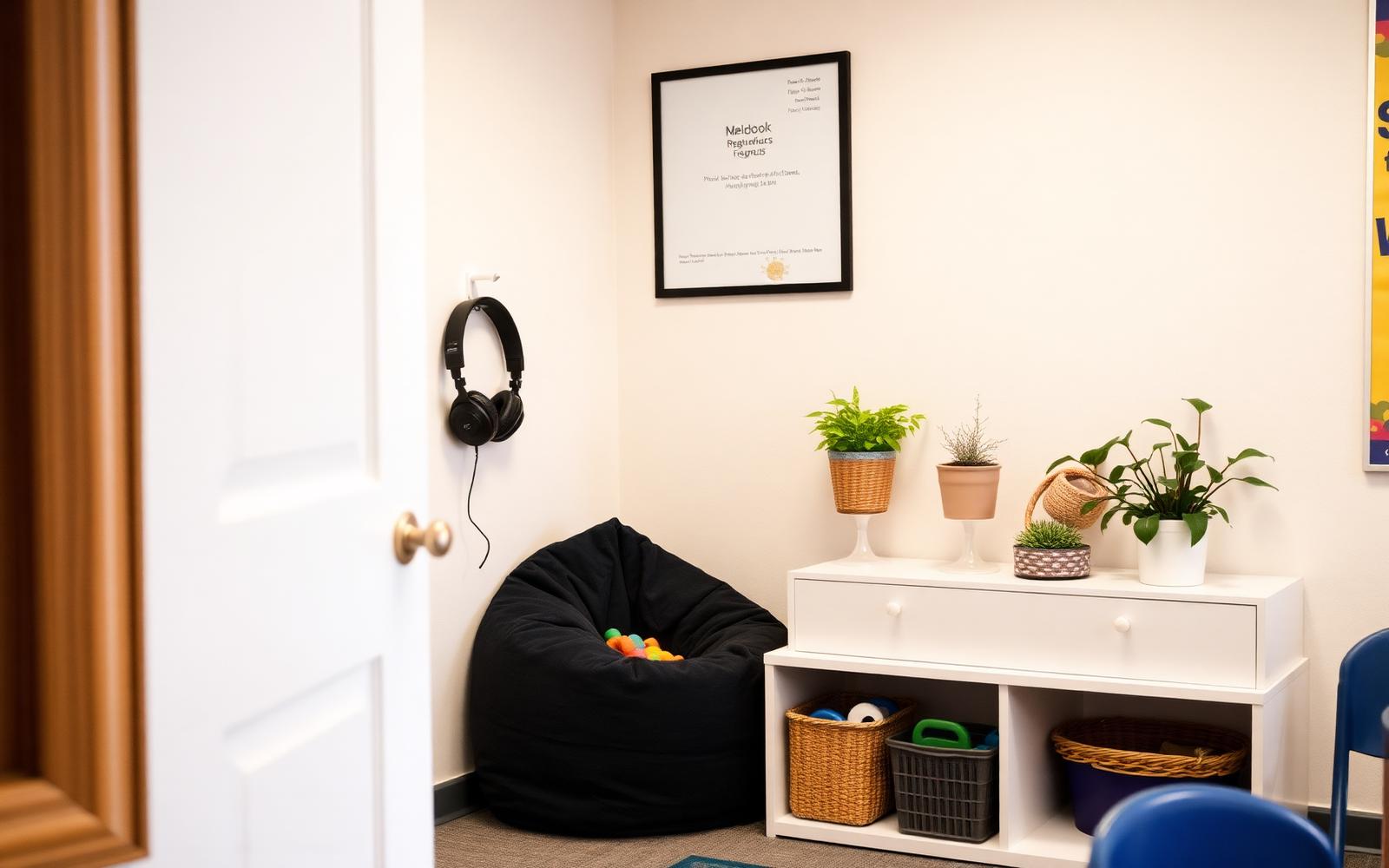
Noise-reducing headphones should be available on a shelf for any child who needs them, without asking.
Visual environment
Walls covered floor to ceiling in colorful posters may look enthusiastic. To a sensory-sensitive brain, they are a screaming carnival. But bare walls can also be dysregulating, because they give the eye nothing to rest on.
The Goldilocks answer: intentional, calm walls with a few well-chosen anchor points. Student work displayed simply. Neutrals as the base, with color used to highlight important information (schedules, learning targets).
Movement
Chairs and desks in rows are a 19th-century invention. Modern classrooms should offer multiple ways to work: standing desks, floor cushions, wobble stools, exercise balls, bean bags. Not as a reward. As a default.
Scheduled movement breaks — not just recess, but two-minute movement transitions between lessons — should be built into the day.
Watch how a teacher responds when a child gets up to move during a lesson. In a sensory-friendly classroom, the answer is often, "That's fine, keep listening."
Regulation stations
A sensory-friendly classroom has at least one designated space for a child to go and reset. Not a punishment corner. A quiet, low-input space, often with soft seating, dim light, and a small selection of calming tools.
Children should be taught to use it, not sent to it. A well-run classroom will practice regulation strategies proactively so that when a child feels dysregulated, they already know where to go and what to do.
Predictability
This one surprises parents. Predictability is a sensory tool.
Posted schedules — visual for younger kids, written for older — reduce anxiety, which reduces sensory reactivity. Consistent routines mean the brain doesn't have to spend filtering energy on figuring out what happens next.
Changes to the schedule should be previewed, not sprung.
Why this helps every child
Parents whose children don't have a sensory diagnosis sometimes ask, "Wouldn't a sensory-friendly classroom baby my child?"
The evidence — and our lived experience — says no. Neurotypical children in sensory-thoughtful classrooms produce more work, get in fewer conflicts, and enjoy school more. Adults do too, incidentally, which is why the best offices have moved in the same direction.
Sensory-friendly design is not accommodation for a few. It is universal design that raises the ceiling for everyone.
How to evaluate a classroom on a tour
Walk in and notice, in the first ninety seconds:
- What do you hear? Is there a low hum of purposeful activity, or ambient chaos?
- What do you see? Is your eye drawn to a few clear anchors, or overwhelmed?
- What do you smell? Is there a background of scented cleaners, food, or bodies?
- How does the room feel temperature-wise? Is it comfortable, or too hot or cold?
- Where would you sit if you were a child having a hard day? Is there anywhere to go?
Then ask the teacher:
- "How do you handle a kid who needs to move during a lesson?"
- "Where does a child go when they need a break?"
- "How do you decide what goes on the walls?"
- "What tools are always available for any student who wants them?"
The answers will tell you whether the space is thoughtfully designed or accidentally arranged.
What parents can do at home
You don't need to remodel your house. Small changes matter.
- Dim the lights during homework and bedtime.
- Add a rug or fabric to a hard-surfaced work area.
- Create one quiet corner — a chair, a lamp, a book — that is not associated with punishment.
- Use a visual schedule for the morning and evening routines.
- Offer choice in sensory input: bare feet or slippers, loud music or quiet, soft blanket or none.
Every one of those moves gives your child's nervous system a little more room to breathe. Which means their brain has more room to learn.
The bigger idea
We have spent a hundred years designing classrooms for teachers, budgets, and building codes. We are just beginning to design them for children's brains.
Sensory-friendly classrooms are not a fad. They are what happens when we stop treating regulation as an interruption to learning and start treating it as the foundation.
Ask any teacher who has worked in both kinds of rooms. They will tell you the difference is not subtle.
Want to see a sensory-friendly K–6 classroom in action? Schedule a tour — we're happy to walk you through how our environment is built, room by room.